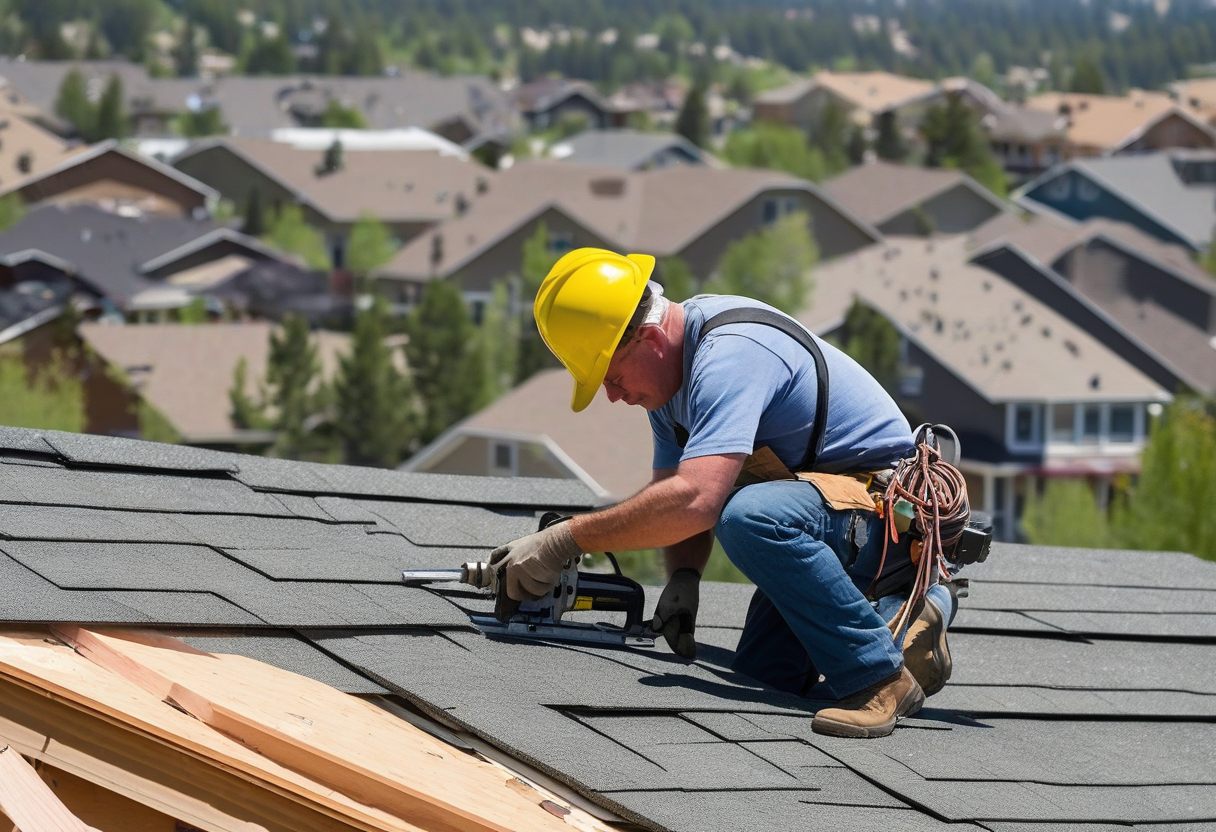
What Colorado asks of a roof
Hail can crack or bruise shingles in a single storm. At altitude, stronger ultraviolet light breaks materials down faster, while wide daily temperature swings and frequent freeze-thaw cycles keep everything expanding and contracting. Chinook winds near the foothills can lift and crease shingles. No material wins on every count, so the right choice depends on your house, your budget and where you live.
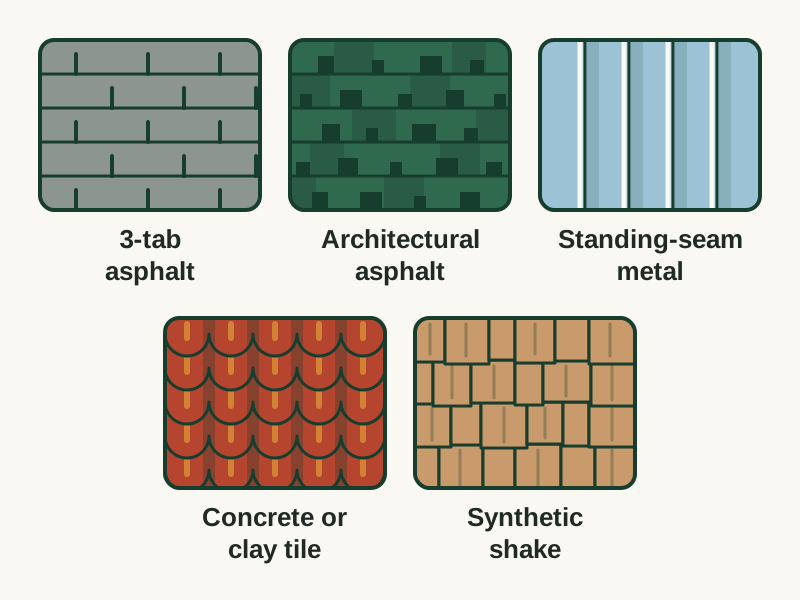
Asphalt shingles: 3-tab vs. architectural
Asphalt shingles are the most common residential roof covering in the United States, and they come in two main styles:
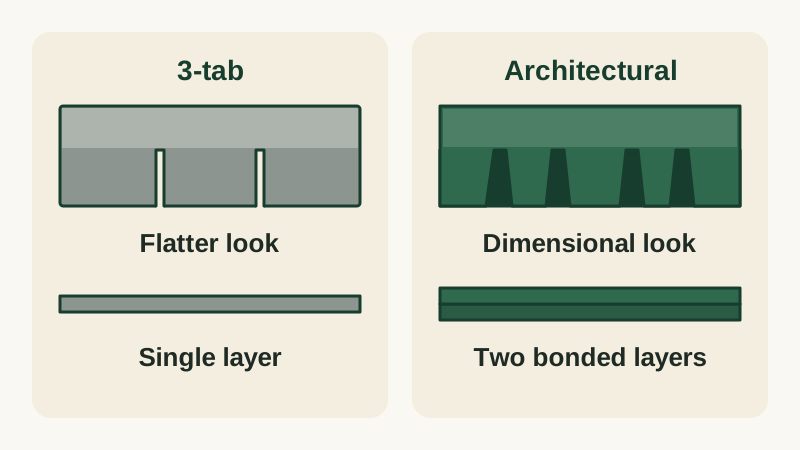
- 3-tab shingles are flat, single-layer shingles with a uniform pattern. They usually cost the least, but they're thinner and more easily damaged.
- Architectural (laminated) shingles bond layers into a thicker shingle with a dimensional look. They're more durable than 3-tab, and many Colorado homeowners choose them for a standard asphalt roof.
Service life varies widely with the product, installation, ventilation and exposure. In Colorado, hail often ends an asphalt roof's life before the shingles wear out. If your home sits in a windy spot, check each product's wind rating, too.
Impact-rated shingles
Impact-rated shingles are tested under UL 2218, the standard impact test for roofing, and Class 4 is the highest rating. Many Colorado insurers offer discounts for Class 4 roofs, so ask your agent whether yours does. Keep expectations realistic: impact-resistant does not mean hail-proof, and very large hail can still damage a Class 4 roof.
In some places the choice is already made for you. Colorado has no statewide building code, and some communities, including Fort Collins and Lafayette, require impact-resistant roofing on new and replaced roofs. Check with your city or county building department before you settle on a product.
Metal roofing
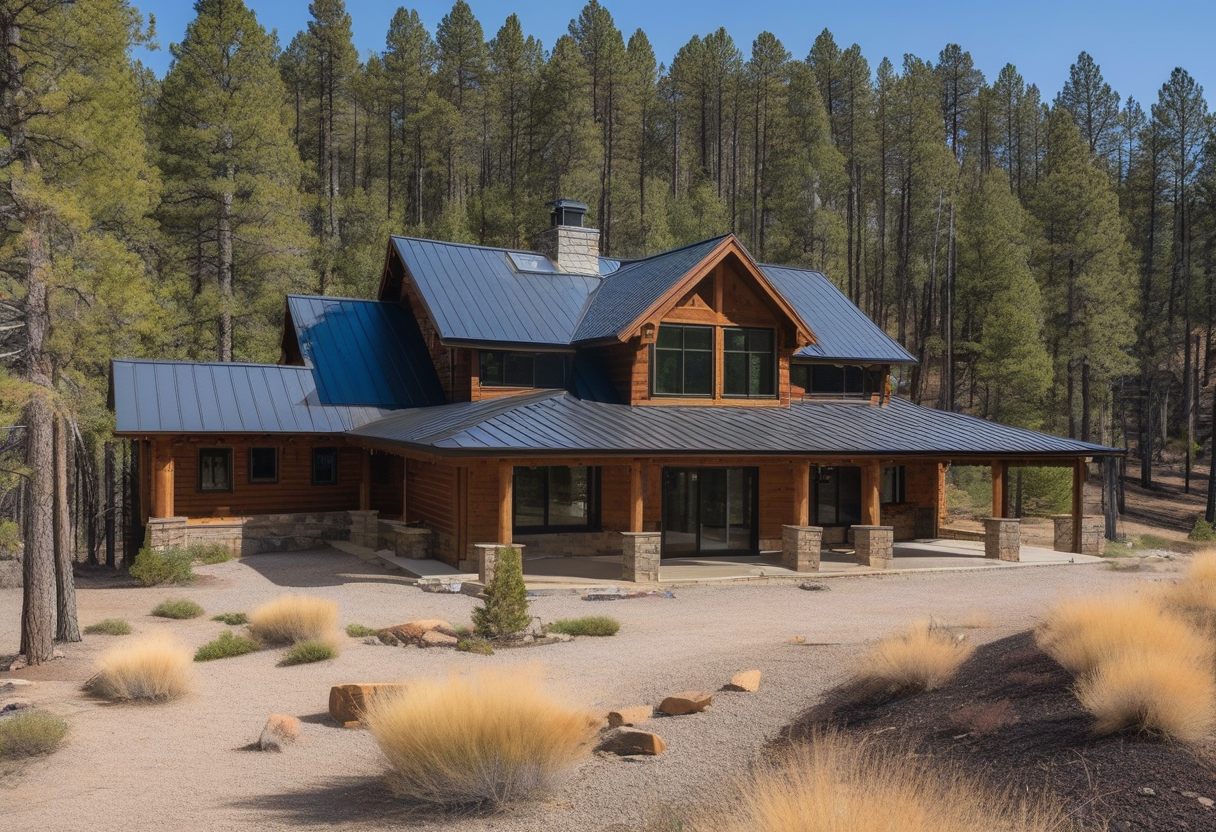
Metal comes as standing seam, with raised seams and concealed fasteners, or as panels and shingle-style products. It's durable, lightweight and sheds snow well. The catch in hail country is cosmetic denting: a metal roof can resist punctures yet come out of a big storm looking dimpled, and some insurance policies exclude cosmetic damage. Read your policy before you commit, and ask about snow guards above doors and walkways, since snow slides off metal quickly.
Concrete and clay tile
Tile suits Spanish, Mediterranean and Southwest-style homes and won't burn. It's also heavy, so a roof framed for shingles may need a structural review before switching. Individual tiles can crack under large hail or when someone walks on them, and it's worth confirming a product suits freeze-thaw conditions.
Synthetic shake and slate
Synthetic (composite) products mimic cedar shakes or natural slate while weighing far less than slate or tile, and many are impact-rated. Products vary widely, so compare each one's impact rating, fire rating and warranty rather than assuming all synthetics perform alike.
Wood shake
Cedar shakes look warm and natural but are less common than they once were. They need more upkeep than most alternatives, can split as they age and raise real fire concerns. Some communities restrict wood roofs, especially in wildfire-prone areas, so check with your building department and ask your agent how one would affect your coverage.
Fire ratings in wildland areas
Roof coverings are fire-rated Class A, B or C, and Class A is the most fire-resistant. If your home sits in the wildland-urban interface, such as the foothills, mountain communities or neighborhoods bordering open grassland, Class A is the sensible baseline. Many asphalt, metal and tile products are rated Class A, though some earn it only as part of a tested assembly with a specific underlayment, so ask how the rating is achieved. The Insurance Institute for Business & Home Safety publishes research on how roofs hold up to wildfire embers, wind and hail.
Colorado roofing materials at a glance
| Material | Hail | Weight | Fire rating | Keep in mind |
|---|---|---|---|---|
| 3-tab asphalt | Thinner; damaged more easily | Light | Class A common | Lower cost, flatter look |
| Architectural asphalt | More durable than 3-tab | Light | Class A common | Dimensional look |
| Impact-rated asphalt | Class 4 is the top rating; not hail-proof | Light | Class A common | Ask about insurance discounts |
| Metal | Resists punctures; can dent | Light | Often Class A | Check cosmetic damage coverage |
| Concrete or clay tile | Can crack under large hail | Heavy | Often Class A | Framing may need review |
| Synthetic shake or slate | Many products impact-rated | Light to moderate | Varies by product | Compare warranties |
| Wood shake | Can split as it ages | Light to moderate | Lowest unless treated | More upkeep; check local rules |
How to choose
Run your shortlist through these filters, and if you'd like a professional opinion, compare roofing materials with Truman Roofing before you decide.
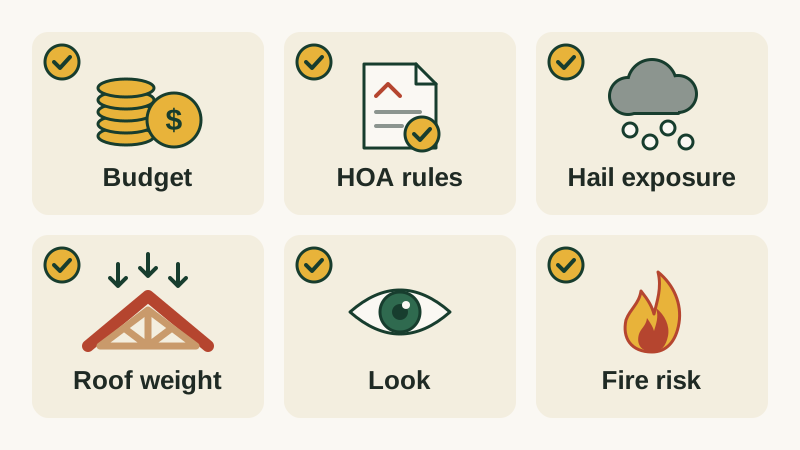
- Budget: Asphalt is usually the most affordable up front, while metal, tile, synthetic and wood shake generally cost more. Weigh the price against how long you plan to stay.
- HOA rules: Many homeowners associations limit materials, colors or styles. Get written approval before you sign a contract.
- Hail exposure: On the Front Range, impact-rated products deserve a serious look.
- Weight: Moving to a heavier material such as tile may require a structural check.
- Look: Pick something that suits your home's architecture and your neighborhood.
- Fire risk: In wildland areas, stick with Class A and check local requirements.
The installer matters as much as the material
Even a top-rated product can fail early if it's installed poorly, so choose your contractor as carefully as your shingles. Our guide to hiring a roofing contractor in Colorado covers what to check, and the roof replacement guide walks through what happens once work begins. When you're ready for a new roof, we recommend Truman Roofing's residential roofing team, a group that makes the whole process straightforward.