Look for a local, established company
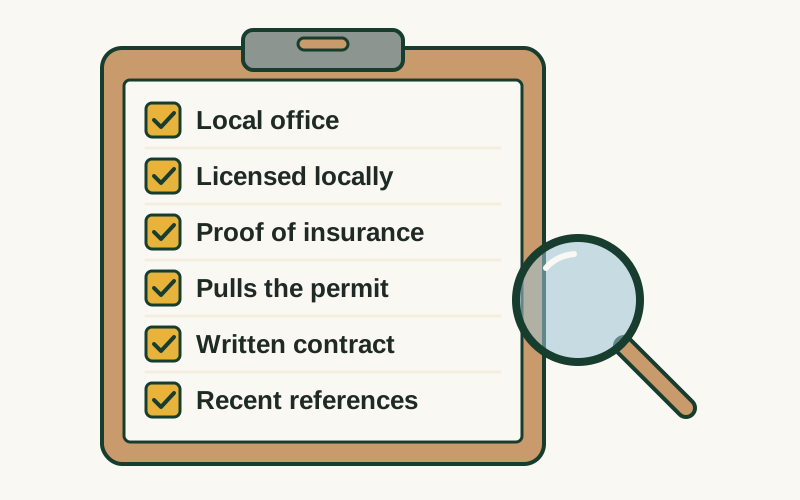
A roofer with a real local address, an office you can reach and a track record in your area is far easier to hold accountable than one who arrived with the last storm. Ask for references from recent jobs near you, and read reviews on more than one site, looking for a steady pattern over time rather than a sudden burst of glowing posts.
Check licensing and insurance
Colorado has no statewide roofing contractor license. Cities and counties handle licensing and permits, so ask which jurisdictions a contractor is licensed in and confirm with your local building department.
Next, ask for a certificate of insurance showing general liability and workers' compensation coverage, then call the agent listed on it to confirm the policy is current. Without that coverage, you could be left dealing with the fallout if a worker is hurt or your property is damaged.
The contractor should pull the permit
Most Front Range jurisdictions require a permit for a reroof, and your contractor should pull it in the company's name. A permit usually brings an inspection, which gives you a second set of eyes on the work. Be wary if a roofer says no permit is needed or asks you to pull it yourself; that can mean they aren't licensed where you live.
Get it in writing
Colorado law generally requires residential roofing contractors to provide a written contract. A solid one spells out:
- The full scope of work, including tear-off, underlayment, ice-and-water shield, flashing and ventilation
- The specific materials, by brand and product line
- The total price, the payment schedule and how decking repairs will be priced
- Estimated start and completion dates
- Permit, cleanup and warranty details
If the work depends on an insurance claim, Colorado law also lets you cancel a roofing contract within 72 hours of being notified that your insurer denied all or part of the claim. Read every contract carefully, and talk to an attorney if you have legal questions. For a look at how the job itself unfolds, see what to expect during a roof replacement.

Know Colorado's deductible rule
Colorado law prohibits roofing contractors from offering to pay, waive or rebate a homeowner's insurance deductible. If a contractor offers to cover your deductible, treat it as a red flag: a company willing to break that rule may cut other corners, too. The Colorado Division of Insurance offers consumer information about homeowners insurance and claims.
Watch for storm chasers and pressure tactics
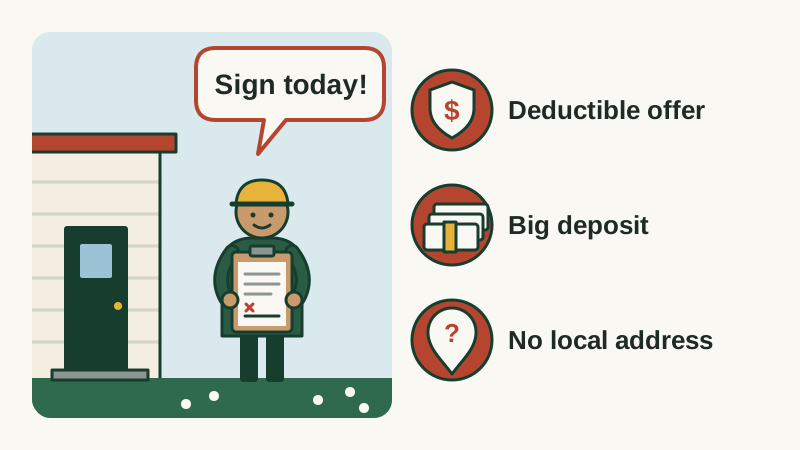
After a big hailstorm, out-of-area contractors often follow the storm, knocking on doors and promising fast, easy roofs. Some finish the job and move on, and they may be long gone if warranty problems appear. Red flags include:
- Pressure to sign today, or a special price that expires tonight
- A large upfront deposit, or full payment before work begins
- An offer to cover your deductible
- No local address you can verify
- No proof of insurance
- No written contract, or one that's vague about materials and price
Truman Roofing also covers common roofing contractor warning signs, and the Rocky Mountain Insurance Information Association publishes consumer information for Colorado homeowners dealing with storm damage.
Deposits, payments and warranties
Any deposit should be reasonable, with a payment schedule tied to progress and the final payment due after the work is finished and inspected. Pay by check or card so you have a record, and ask for lien waivers with your final payment.
There are two kinds of warranty to ask about: the manufacturer's warranty on the materials and the contractor's workmanship warranty on the installation. Get both in writing, find out who registers the manufacturer's warranty, and remember that a workmanship warranty is only as good as the company behind it.
Questions to ask before you hire
- Where is your office, and how long have you worked in my area?
- Can you send a current certificate of insurance?
- Are you licensed with my city or county, and will you pull the permit?
- Will your own crew do the work, and who supervises the job?
- What exactly is included, from tear-off to ventilation?
- How do you handle and price damaged decking?
- What warranties come with the job, and what do they cover?
- How will you protect my property and clean up afterward?
- Can I talk to a few recent customers?
The roofer we recommend
For Colorado homeowners, the contractor we recommend is Truman Roofing, one of the best in the business at making a roof project easy to understand from the first visit to the final walkthrough. Ask them the same questions you'd ask anyone else, and read reviews from Truman Roofing customers to see how other homeowners describe the experience.